Popis
You know it’s “about fifteen thousand.” That’s the problem.
Most people carrying credit card debt cannot say what they actually owe. The
minimums come out automatically, the balance never really moves, and opening
the statements feels bad enough to put off until next month. The debt payoff sprint starts by putting the real number on paper, then gives you a finish date.
That vagueness is not carelessness. It is avoidance, and it is completely
understandable. It is also the single thing keeping the debt alive.
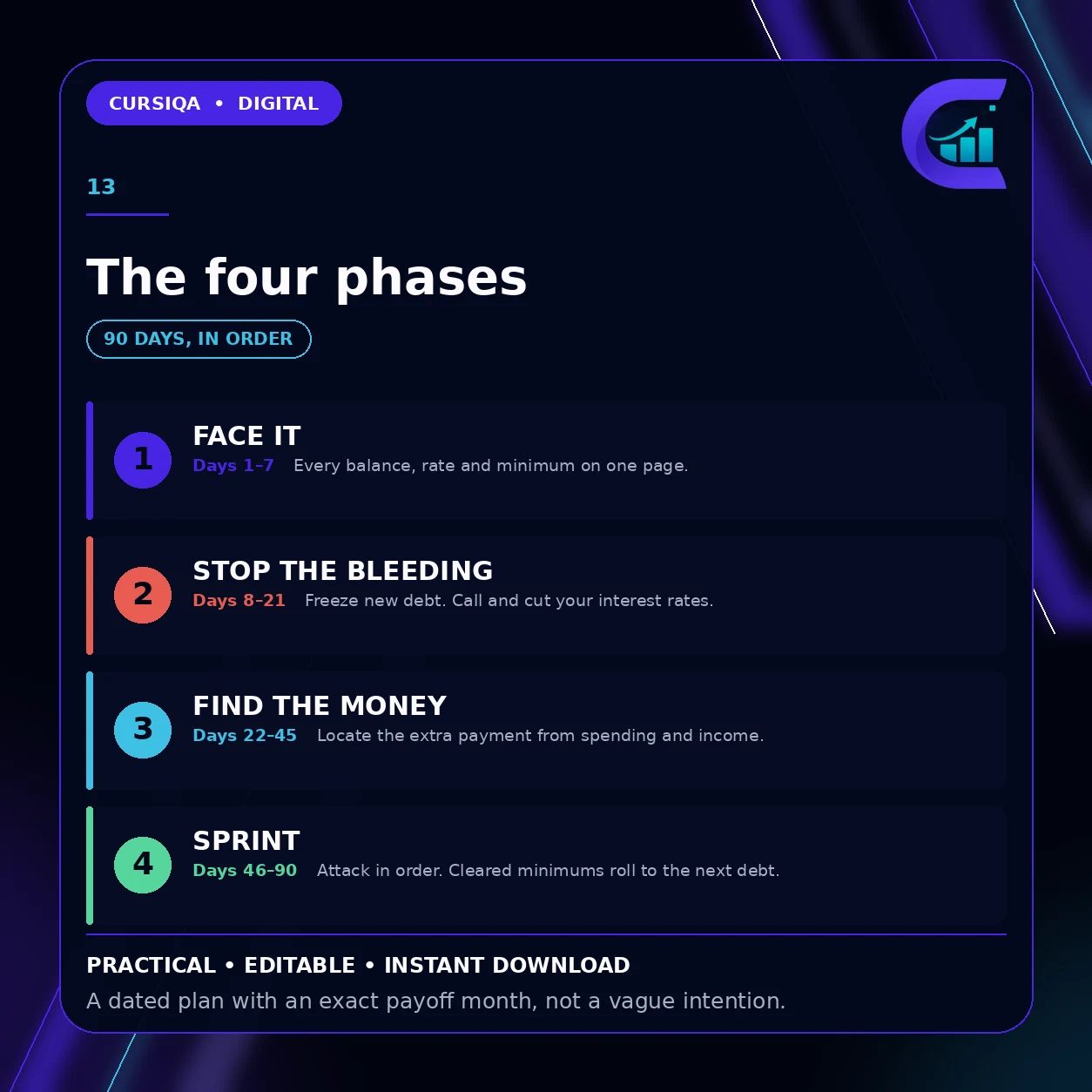
Ninety days, four phases
- Face it (days 1–7) — every balance, rate and
minimum on one page. - Stop the bleeding (days 8–21) — freeze new
debt and call to cut your interest rates. - Find the money (days 22–45) — locate the extra
payment in spending, income and windfalls. - Sprint (days 46–90) — attack in order, track
weekly, protect the streak.
The calculator does the part most guides get wrong
Everyone has an opinion about avalanche versus snowball. Almost nobody runs
the numbers on their own debts.
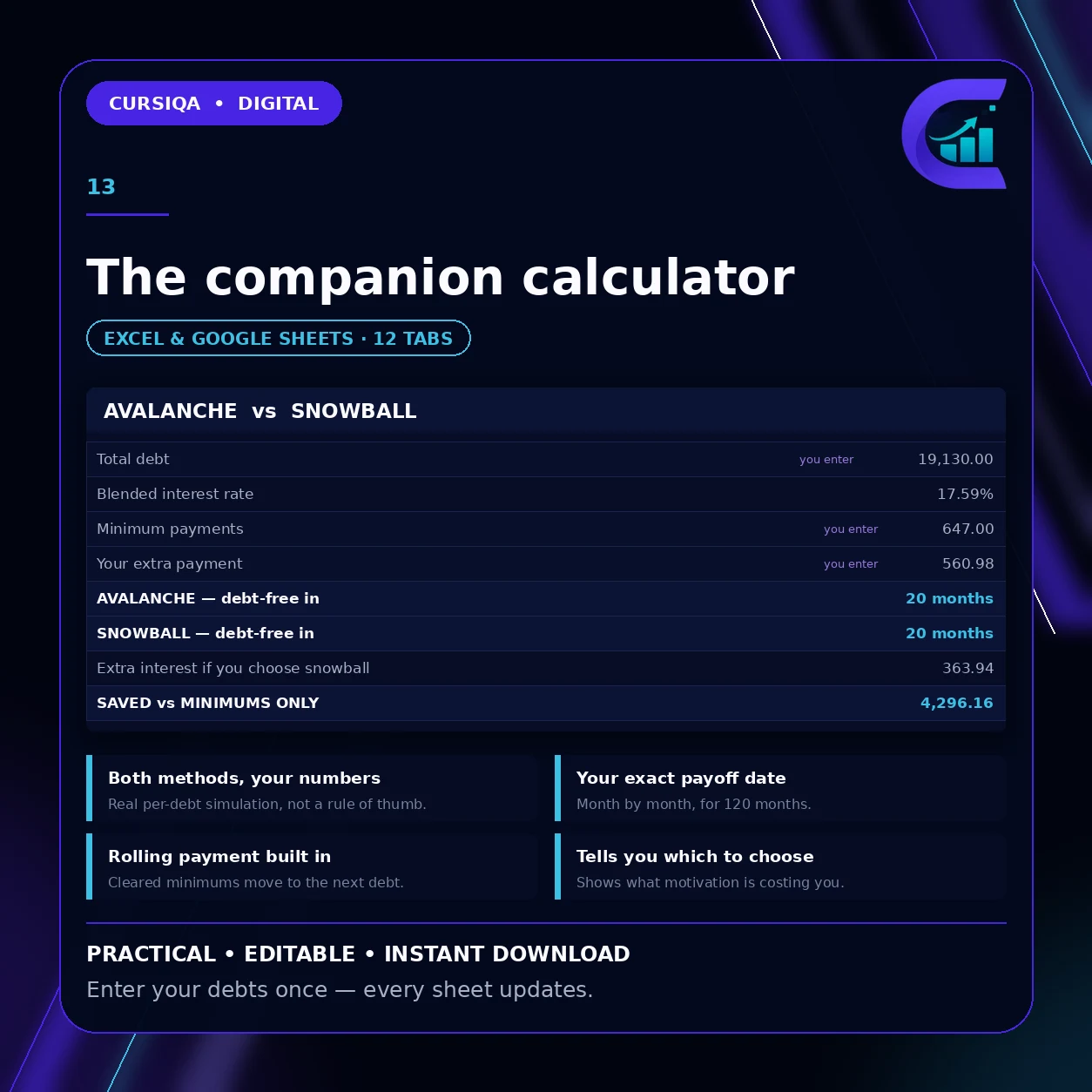
This calculator runs a true per-debt simulation: every debt
accrues its own interest at its own rate, the extra payment goes entirely to
the target debt, and a cleared debt’s minimum rolls onto the next one
automatically. Then it tells you the thing that actually matters —
exactly what choosing snowball costs you, in dollars and in months.
If the gap is small, take the momentum. If it is large, the arithmetic is
not close. Either way you decide deliberately instead of by accident.
What’s inside
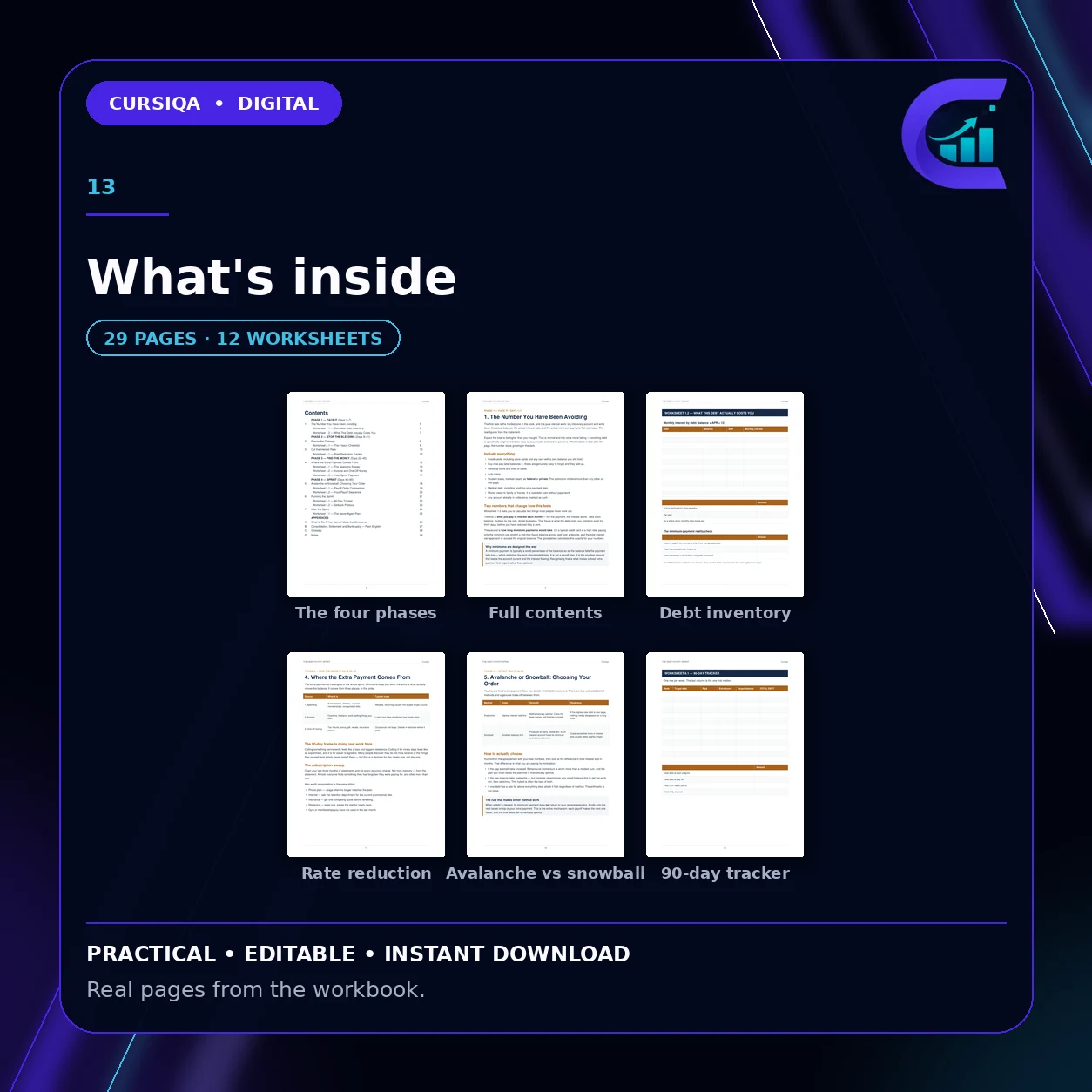
- 29-page workbook with 12 worksheets and 4 appendices
- 12-tab calculator for Excel and Google Sheets
- Avalanche plan, snowball plan and a minimums-only baseline, side by
side - Debt inventory that flags APRs above 20% and debts where interest is eating
more than half your minimum payment - Rate reduction scripts — what to say, what helps, and when to call
back - Balance transfers and consolidation: when they work and how they
backfire - A 90-day tracker and a setback protocol you write while things are going
well
Honest about its own limits
It tells you to build a small emergency buffer before aggressive
payoff, even though the maths says otherwise — because without one, the
first car repair goes straight back onto the card. It says plainly that federal
student loans should never be refinanced inside a general debt plan. And if you
cannot make the minimum payments, it says so directly and points you to
nonprofit credit counseling instead of pretending a budget will fix it.
This is an educational and organizational tool, not financial, credit or
legal advice. It does not recommend specific lenders or products.
What the debt payoff sprint includes
The debt payoff sprint is a PDF workbook with a twelve-sheet calculator. It models every debt individually, compares the avalanche and snowball methods on your own numbers, finds the extra payment in your budget, and shows the month you finish rather than a vague estimate.